
WHAT IS ANTI-STATIC PE FOAM?
Anti-static PE foam, also known as ESD foam, is manufactured by adding anti-static additives during the production process. This material is designed to control and reduce the accumulation of static charges on its surface, thereby minimizing electrostatic discharge (ESD). It effectively protects electronic components, electrical devices, and other static-sensitive products during storage, transportation, and packaging.
Working Principle
Anti-static PE foam does not completely eliminate electrical charges; instead, it controls and minimizes electrostatic discharge. This significantly reduces the risk of damage to sensitive electronic components.
Key Features of Anti-Static PE Foam
• Minimizes static charge buildup on the surface, reducing the risk of electrostatic discharge (ESD).
• Lightweight and easy to fabricate into various sizes and shapes.
• Excellent resilience and shock absorption, protecting products from mechanical damage.
• Moisture-resistant, water-resistant, and durable under a wide range of environmental conditions.
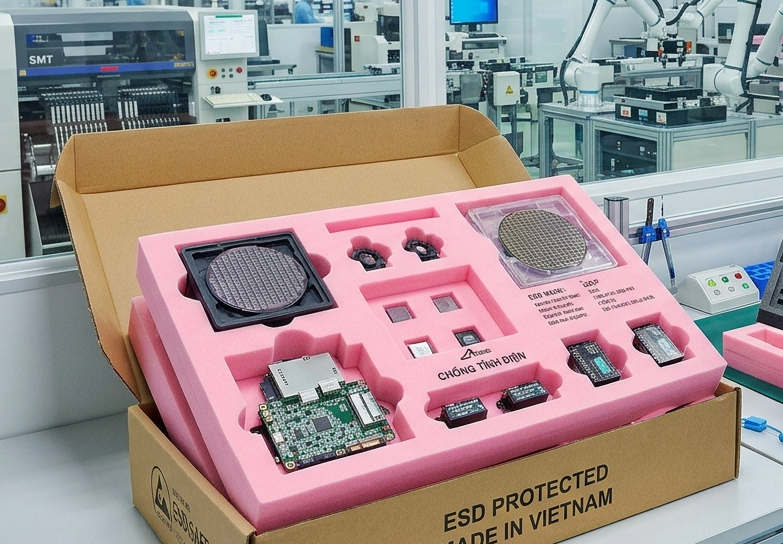
• Commonly available in pink for easy identification as an anti-static material, with black versions also available depending on application requirements.
• Surface resistivity: 10⁶–10¹¹ Ω (ohms), meeting industry standards for rapid static dissipation. Surface resistivity can also be customized according to manufacturer requirements.
Practical Applications
1. Electronic Component Packaging
 This is the most common application of anti-static PE foam. It provides reliable protection for:
• Printed Circuit Boards (PCBs)
• IC chips, CPUs, and semiconductor integrated circuits
• Sensors and electronic modules
• SMT and SMD components
With its static control capability, anti-static PE foam minimizes the risk of component damage during storage and transportation.
2. Protection of Consumer Electronic Devices
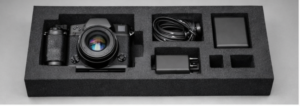 Anti-static PE foam is widely used for packaging:
• Smartphones
• Laptops
• Tablets
• LCD, LED, and OLED displays
• Telecommunications equipment
The foam layer absorbs impact while preventing electrostatic discharge from affecting the sensitive components inside the devices.
3. Manufacturing and Assembly of High-Tech Equipment
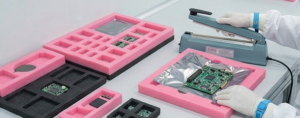 Anti-static PE foam helps optimize production and packaging costs while maintaining and even enhancing product protection.
It is commonly used to:
• Line component trays
• Separate component assemblies on production lines
• Protect products during assembly and quality inspection processes
4. Semiconductor and Integrated Circuit Industry
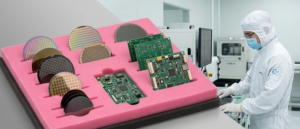 Semiconductor products are extremely sensitive to electrostatic discharge (ESD). Anti-static PE foam is widely used for:
• Packaging semiconductor wafers.
• Storing and protecting precision electronic components.
• Safeguarding sensitive components during transportation between production stages.
5. Medical Device Packaging
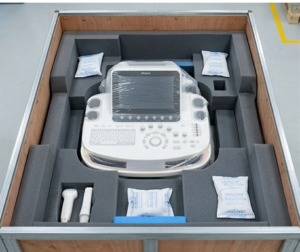 Many modern medical devices contain highly sensitive electronic sensors, including:
• Blood pressure monitors.
• Diagnostic and laboratory testing equipment.
• Ultrasound machines.
• Health monitoring devices.
Anti-static PE foam helps ensure these devices remain protected from electrostatic discharge throughout storage and transportation.
6. Automotive and Aerospace Electronics Packaging
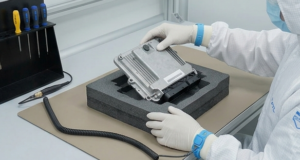 Anti-static foam (ESD Foam) is an essential protective packaging material for electronic devices such as ECUs, sensors, and aerospace electronic components. Electrostatic discharge (ESD) can permanently damage microscopic semiconductor circuits without leaving visible burn marks. In addition, anti-static PE foam provides reliable protection for:
• Automotive sensors.
• Navigation devices and electronic control systems.
• Aerospace electronic components.
Contact Us
For more information, please contact:
S.G Chemical Co., Ltd.
Phone: +84 933 678 637
Email: sgsale@vinalon.vn
Facebook: SGvinalon